
Why Industry Partnerships Are Becoming Important for ITI Training
An ITI can have good teachers, proper classrooms and even a well-equipped workshop. But there is still one important question:
Are students learning what they will actually use when they enter the workplace?
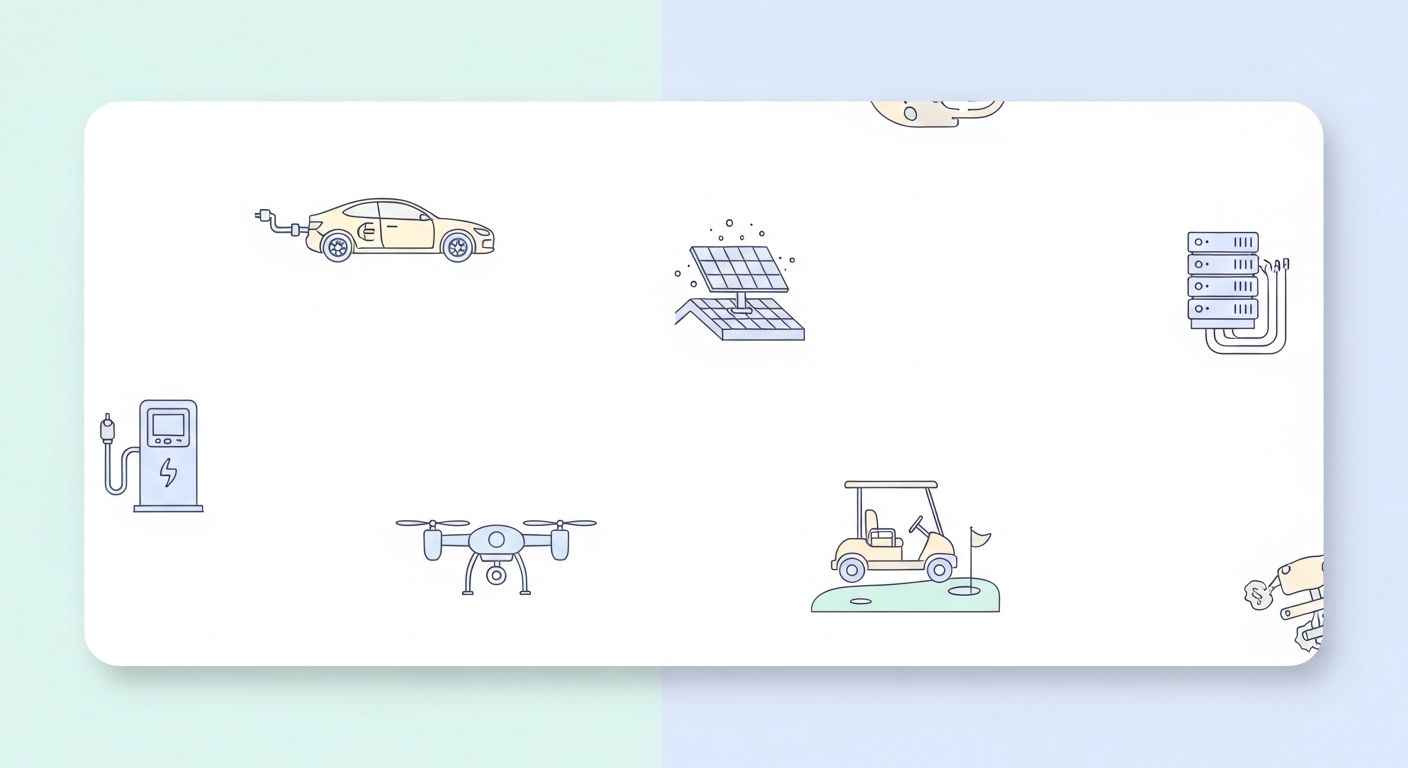
This question is becoming more important as industries change. Factories are using more automation and robotics. Electric vehicles are creating new technical roles. Solar energy is expanding, and technologies like IoT, CNC, drones and digital manufacturing are becoming part of different industries.
Because of this, ITI training cannot stay limited to traditional classroom learning. Students need a strong foundation, but they also need to understand how their skills are used in real working environments.
This is where industry partnerships can play an important role.
Why the Industry Connection Matters
The basic principles of a trade do not change overnight.
An electrician still needs to understand wiring and electrical safety. A welder still needs to understand welding processes. A fitter still needs to know how to use tools and read technical drawings.
But the equipment around these trades is changing.
An electrician may now work with solar systems, EV chargers, industrial control panels or automated equipment.
A mechanical trainee may find CNC machines, robotic systems and automated production lines in the workplace.
An electronics trainee may work with sensors, embedded systems, controllers and connected devices.
So the challenge for ITIs is not simply teaching the trade. It is keeping practical training connected with the technologies students are likely to encounter.
Industry Can Show Institutes What Is Actually Needed
One of the biggest advantages of working with industry is getting a clearer picture of current skill requirements.
Companies know what their technicians and entry-level employees are expected to do every day.
They know which machines are being used, which software is required, what safety practices matter and where new employees usually need additional training.
This information can be useful for ITIs when they review their practical training.
For example, if local industries are increasingly using PLC-based automation, an institute can give students more opportunities to work with PLCs, sensors, motors and HMI systems.
If EV companies are growing in the region, training can include battery systems, charging equipment, electrical diagnostics and EV safety.
The training becomes more connected to the actual job environment.
Students Need More Than Demonstrations
There is a big difference between seeing a machine and actually working with it.
A student can watch a teacher demonstrate a PLC program in a few minutes. But when that student has to connect a sensor, write the logic, identify an error and make the system work, the learning becomes much deeper.
Industry partnerships can help create these kinds of practical experiences.
Companies can support student projects, conduct technical workshops, arrange industrial visits or provide opportunities for apprenticeships.
These experiences give students a better idea of what technical work looks like outside the institute.
Apprenticeships Are an Important Link
For many ITI students, apprenticeship can be one of the first opportunities to experience a real workplace.
Inside an institute, students have a controlled learning environment.
Inside a factory or company, they see production schedules, safety procedures, maintenance routines, teamwork and real equipment.
They also learn something that is difficult to teach completely in a classroom: how people actually work together to solve problems.
Even a short period of industry exposure can help students understand where their technical skills fit into a larger process.
Industry Partnerships Can Help Modernize ITI Labs
Industry collaboration can also influence how an institute develops its laboratory.
Buying expensive machines is not enough.
The equipment needs to be useful for the curriculum and relevant to the skills students are expected to develop.
Suppose an ITI wants to introduce industrial automation training.
Instead of purchasing isolated equipment, the institute could create a small practical setup where students work with sensors, PLCs, motors, conveyors and HMI.
Students can then understand how a simple automated process works from beginning to end.
The same approach can be applied to EV, solar, robotics, CNC and other emerging technology areas.
Faculty Training Is Just as Important
Students are not the only ones who need industry exposure.
Faculty members also need opportunities to learn about new equipment and industrial practices.
A teacher who has been working with traditional equipment for many years may not automatically be comfortable teaching robotics, PLC automation, EV systems or IoT.
Industry-led workshops, factory visits and hands-on training can help faculty update their knowledge.
This becomes especially important when an ITI introduces a new laboratory.
The equipment may be new, but the real value comes when teachers know how to use it effectively in practical classes.
New-Age Trades Make Industry Collaboration Even More Important
The need for industry involvement becomes even clearer with the growth of new-age technical courses.
India's vocational training ecosystem is increasingly covering areas such as electric vehicles, drones, industrial robotics, IIoT, solar technology, artificial intelligence, additive manufacturing and semiconductor technology.
These fields are evolving quickly.
An institute cannot always rely only on an old training model when the technology itself keeps changing.
Regular interaction with companies, technology providers and industry professionals can help institutes understand what skills are becoming important and where students need more practical exposure.
It Is Not About Replacing Traditional Training
Industry partnerships do not mean that traditional ITI education is no longer useful.
The fundamentals are still important.
A student cannot understand industrial automation without basic electrical and electronic knowledge. An EV technician still needs a strong understanding of electrical systems. A solar technician needs to understand basic electrical measurements and safety.
The role of industry is to help build on those fundamentals.
The ideal approach is something like:
Strong fundamentals → Practical lab training → Industry exposure → Real projects → Workplace experience
Each stage supports the next.
What a Good Industry-ITI Partnership Can Look Like
There is no single model that every institute needs to follow.
For one ITI, the partnership might focus on apprenticeships.
For another, it could involve faculty training and equipment planning.
Another institute might work with companies on student projects, industrial visits or placement-oriented training.
The important thing is that the relationship should continue instead of being limited to a single event.
Regular feedback can help the institute understand whether students are developing the skills that employers actually need.
Where SkyySkill Labs Fits In
SkyySkill Labs works with educational and skill-development institutions to create practical, industry-oriented laboratory environments.
Its solutions cover areas such as EV Technology, Solar & Renewable Energy, Industrial Automation, IoT & Robotics, Electrical Systems, Drone Technology, 3D Printing and CNC Simulation.
For an institute planning to modernize its training infrastructure, the process can involve much more than simply supplying equipment. Lab design, equipment selection, installation, commissioning, faculty training and technical support can all be part of the overall setup.
This kind of approach helps institutes connect the different parts of technical education—the curriculum, the laboratory, the faculty and practical industry applications.
For example, an Industry 4.0-focused training environment can bring together automation, robotics, sensors, IoT and digital manufacturing so students can work on projects that involve multiple technologies rather than learning each one separately.
The Local Industry Connection Matters
Not every ITI needs the same kind of industry partnership.
An institute located near an automobile manufacturing cluster may have different requirements from one located near solar companies, engineering workshops or electronics manufacturers.
This is why local industry connections can be particularly valuable.
If institutes understand the industries around them, they can make more informed decisions about courses, equipment, practical projects and student exposure.
It also creates opportunities for companies to find students who already have some familiarity with the technologies they use.
The Goal Is Simple: Make Training More Relevant
At the end of the day, the purpose of industry collaboration is not to make an ITI look more modern.
It is to make training more useful.
A student should leave an institute with more than a certificate. They should have an understanding of tools, equipment, safety, troubleshooting and the way their trade is applied in the real world.
That is much easier to achieve when educational institutions and industries stay connected.
Conclusion
The workplace is changing, and technical education needs to keep pace.
Industry partnerships can help ITIs understand changing skill requirements, improve practical training, expose students to real working environments and keep faculty updated with current technologies.
For institutes, the goal is not to copy every technology used by industry.
It is to identify what matters for their students and create meaningful opportunities to learn it.
The strongest ITI training model is therefore not simply classroom + workshop.
It is:
Classroom + Practical Lab + Faculty Development + Industry Exposure + Real Projects.
When these pieces work together, students can enter the workplace with a clearer understanding of not only what they have learned, but where and how they can use it.