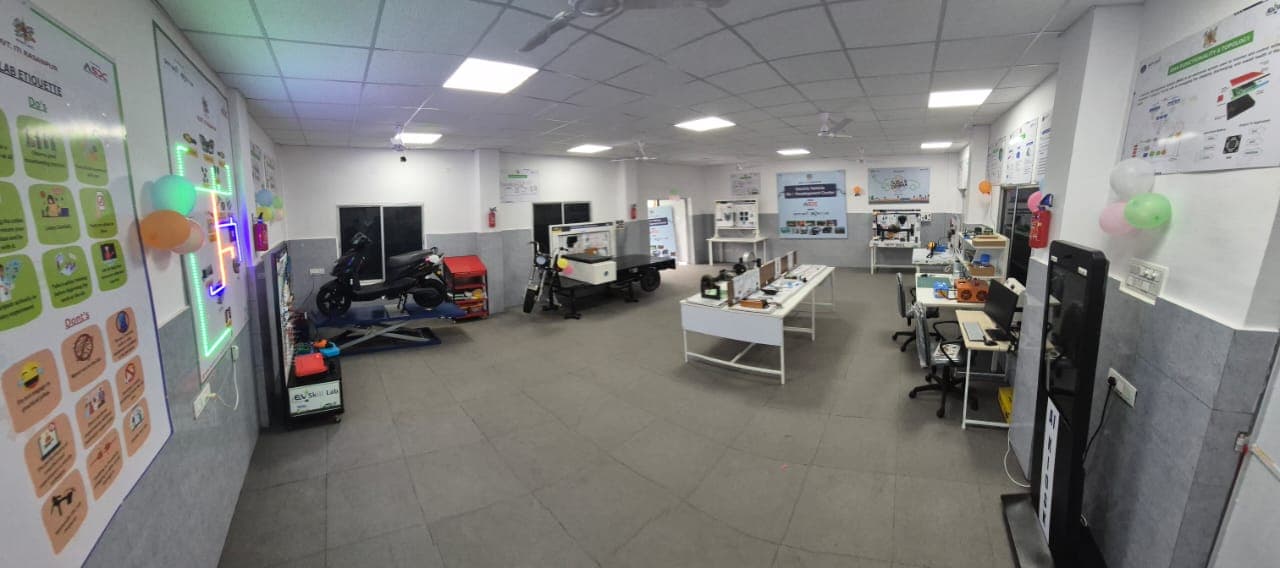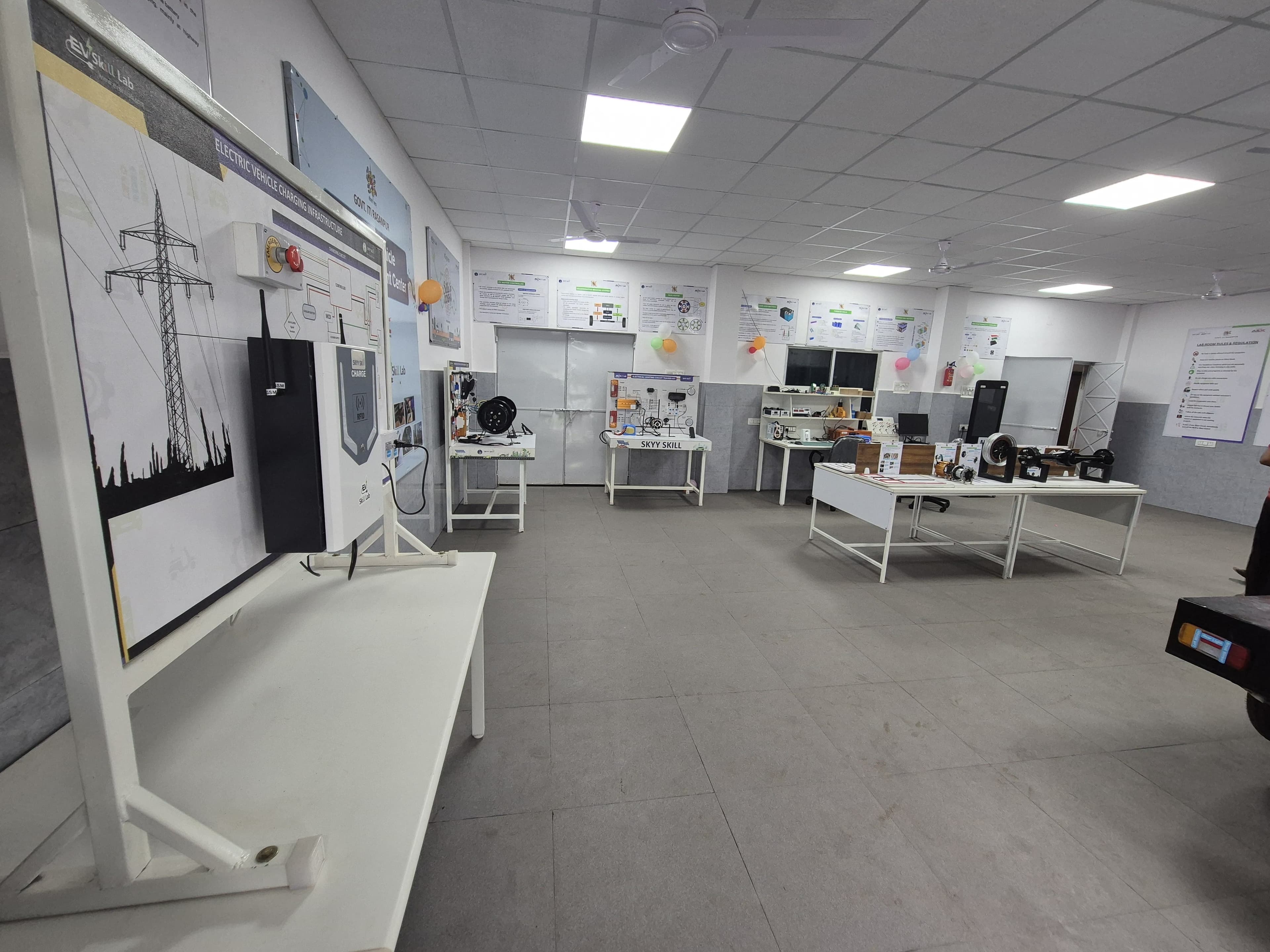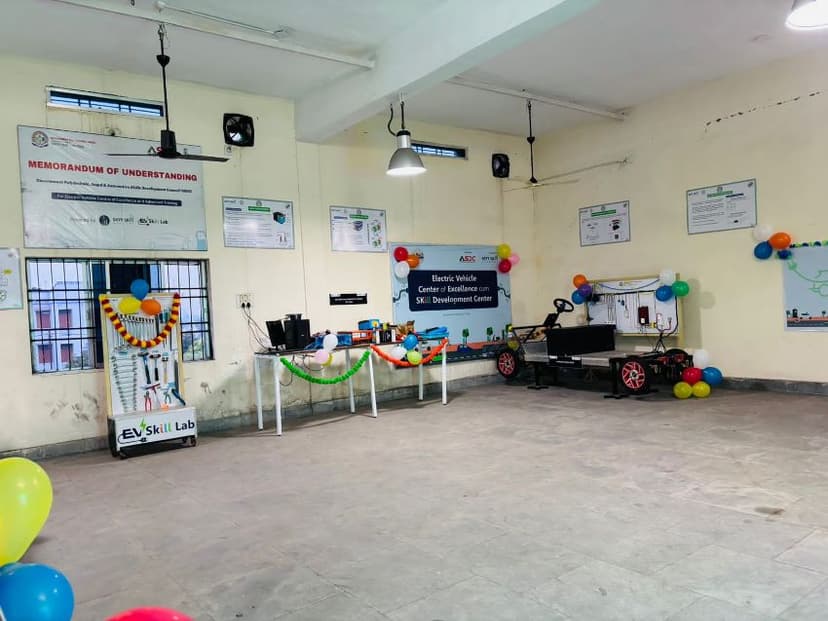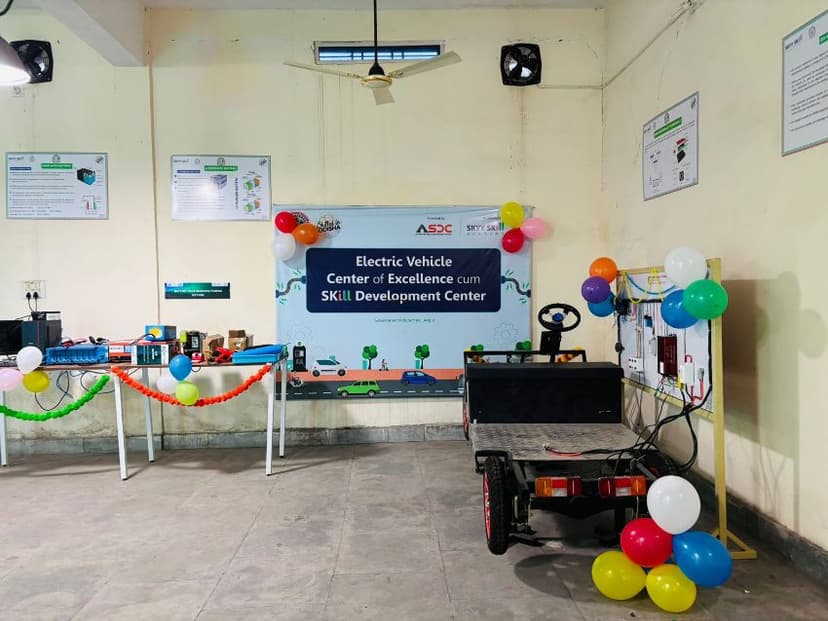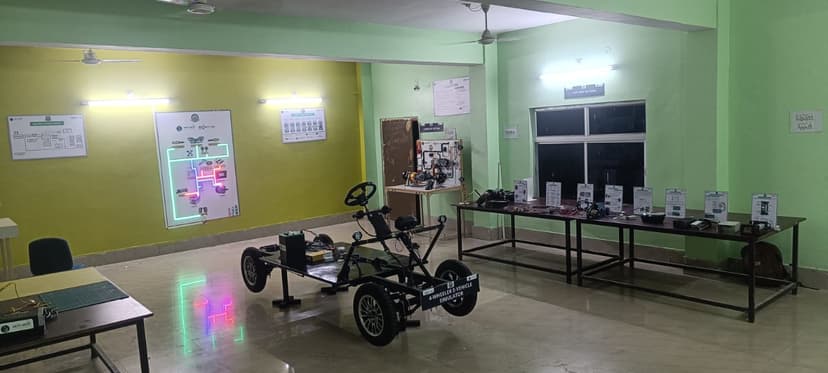
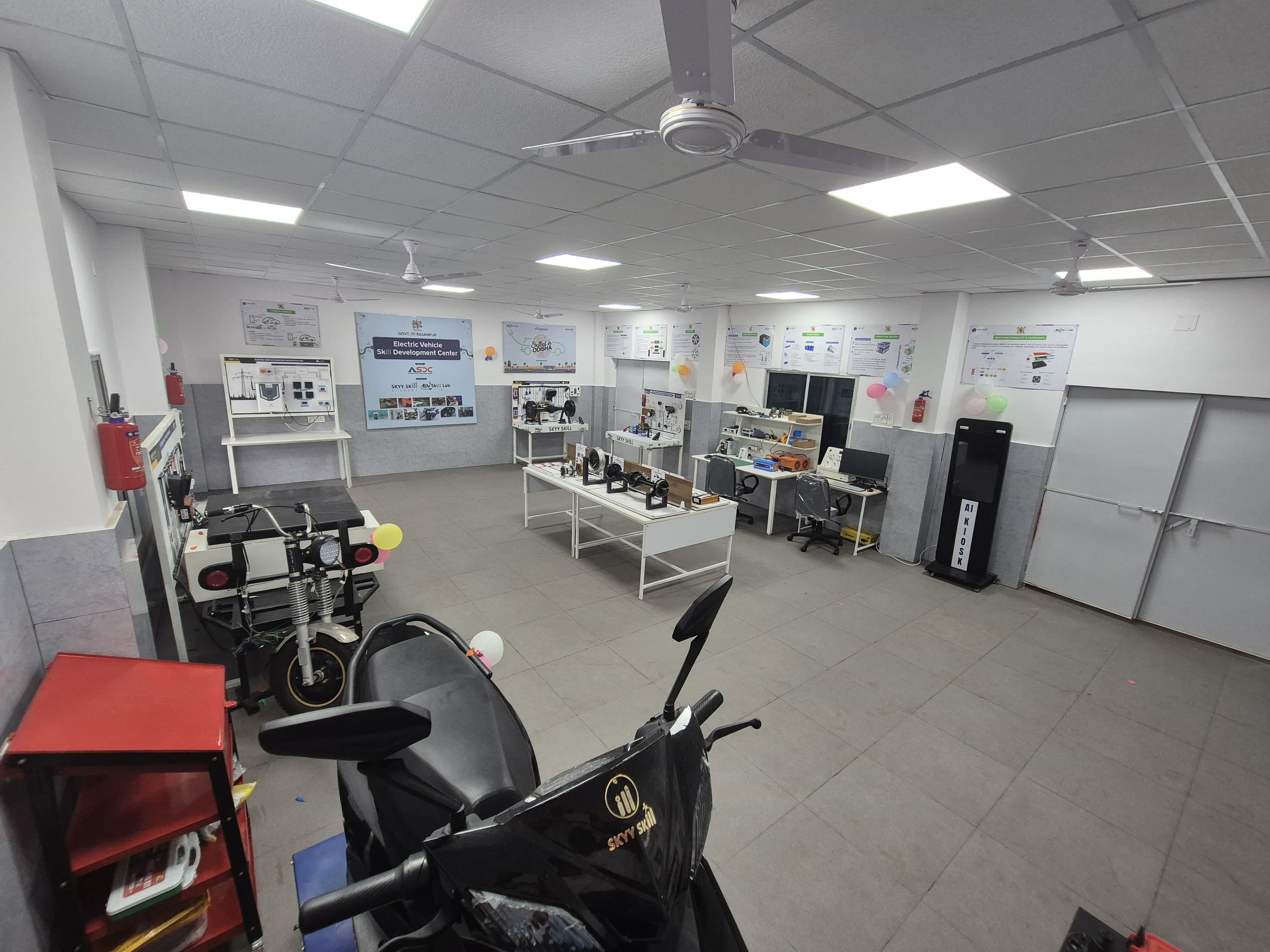
Two-, three- and four-wheeler electric vehicle training all happen in a single EV lab at ITI Rasanpur in Halipali, Odisha, which was completed in September 2025.
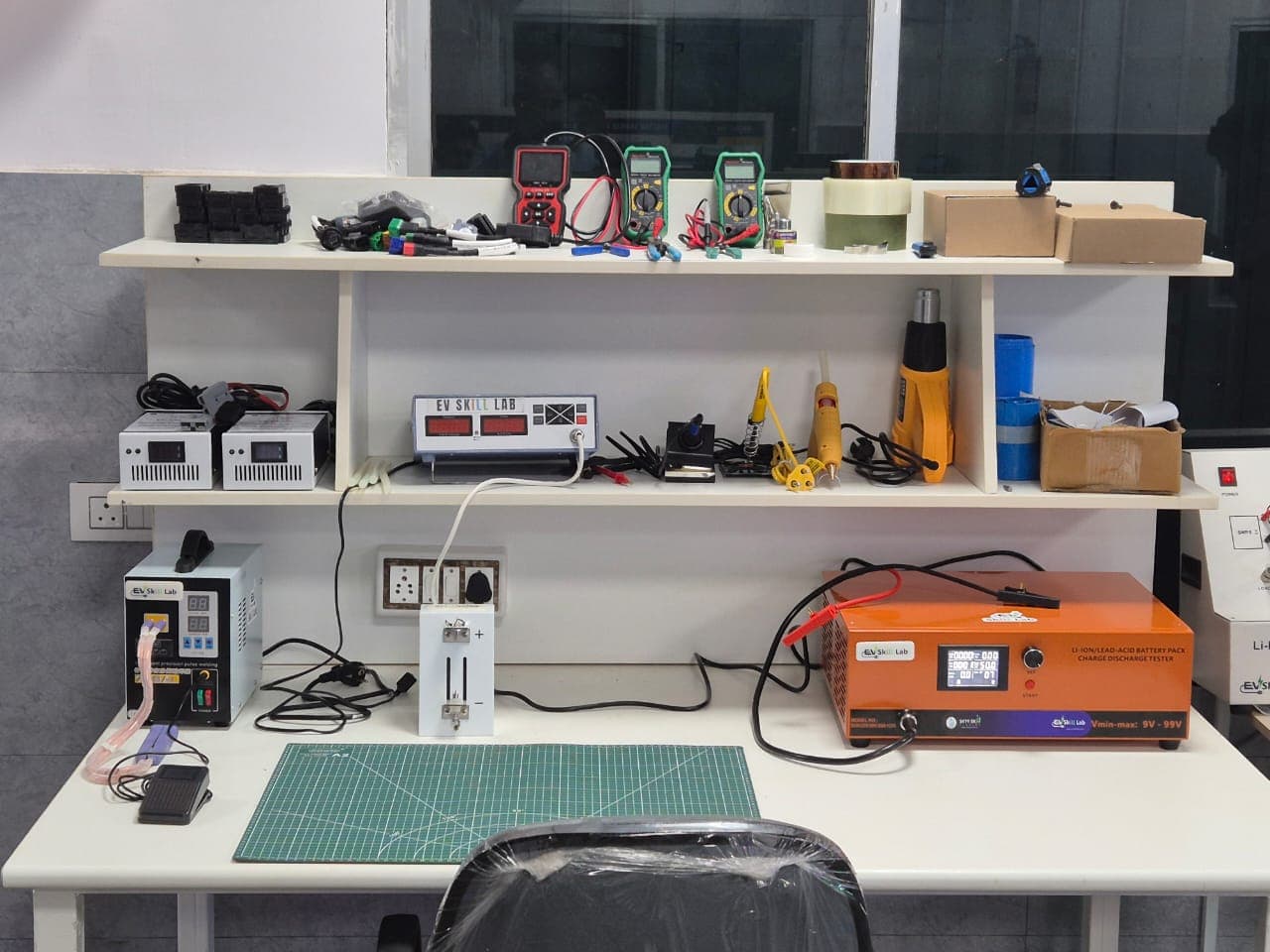
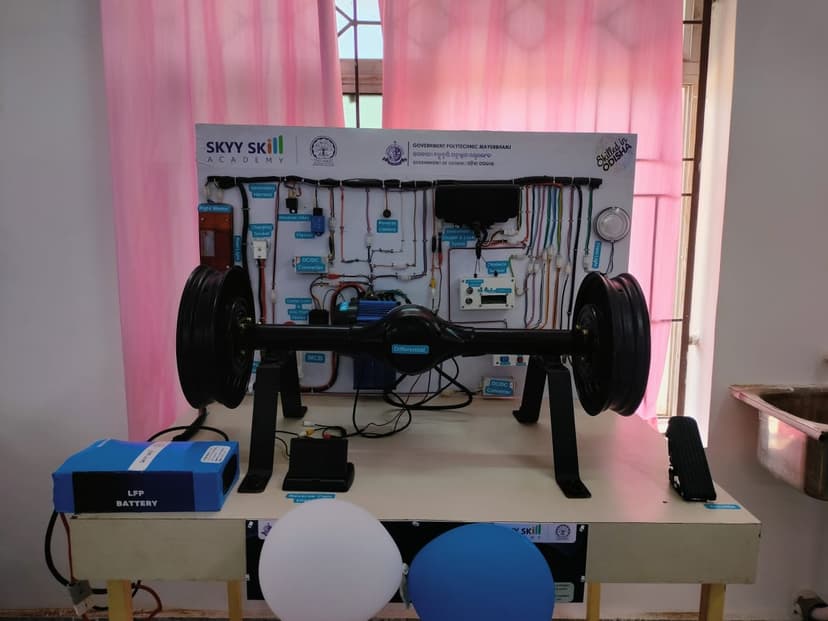
The lab has 2W, 3W and 4W simulators, E-Buggy and E-Loader working models, and EV drivetrain trainers with IoT-enabled test rigs. Battery work uses battery pack testing and Li-ion characteristics systems, plus spot-welding and DIY battery assembly kits. OBD2 diagnostic tools, electrical lighting trainers, an EV trainer kiosk and complete tool and safety kits complete the setup.
Spot-welding is the method used to join lithium-ion cells with nickel strip in commercial pack assembly, so practising it on the DIY battery assembly kits gives trainees a production skill rather than a classroom exercise.
Trainees assemble and dismantle EVs on the working models, wire and test circuits on the lighting trainers, read fault data with OBD2 tools, spot-weld cells into battery packs and run charging and discharging analysis. These tasks prepare them for roles such as EV service technician, battery assembly technician and EV diagnostics technician.
The E-Buggy and E-Loader working models reflect the utility and last-mile goods vehicles that trainees in Odisha are likely to service, giving the course a practical local focus alongside the broader simulator work.